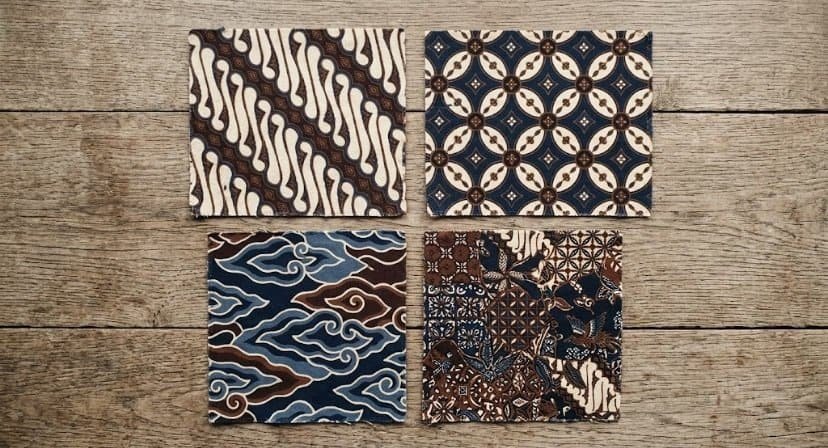
The Meaning Behind Indonesia’s Most Famous Batik Motifs : Every batik motif tells a story — some encode royal history, others carry blessings, warnings, or hopes for the wearer. Understanding these meanings transforms batik from “a beautiful pattern” into a piece of living philosophy. Here are a few of the most recognized motifs and what they represent.
Parang — Strength and Continuity Diagonal, unbroken lines running across the fabric like ocean waves against a cliff. Parang symbolizes resilience and an unbroken connection between generations. It was historically reserved for Javanese royalty and is still considered one of the most powerful motifs today.
Kawung — Purity and Justice Four overlapping oval shapes, resembling the cross-section of a sugar palm fruit. Despite its simplicity, Kawung represents self-control, purity of heart, and fairness — qualities once expected of Javanese leaders who wore it.
Mega Mendung — Patience and Calm Originating from Cirebon, this cloud motif in layered blues represents patience and a calm mind, even in difficult circumstances. Its flowing shapes were influenced by centuries of trade with Chinese merchants.
Sekar Jagad — Diversity and Unity A patchwork of different motifs combined into one cloth, Sekar Jagad literally means “flower of the world.” It represents diversity, beauty, and the idea that many different things can exist together harmoniously — a fitting symbol for Indonesia itself.
Next time you see a batik pattern, look closer — it isn’t just decoration. It’s a message, quietly woven into the cloth.